I was at the gym the other day, half-focused, half-drifting between sets, thinking about how fast everything is about to change, when a thought landed that I haven't been able to put down since.
What if life started to work like StarCraft?
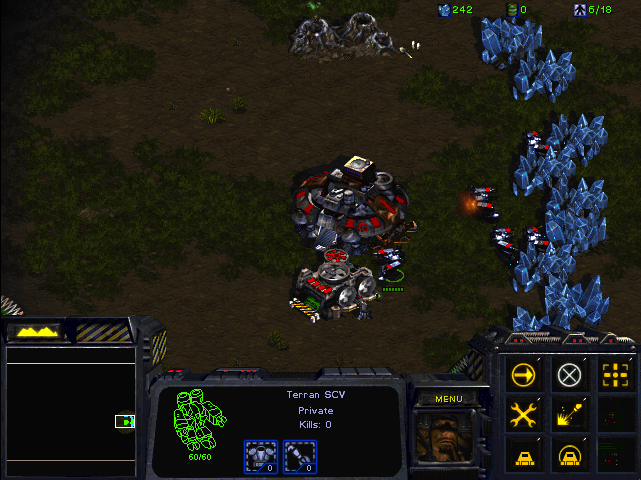
Not the grinding. Not the ladder. The building.
If you've never played: StarCraft is a real-time strategy game where you start with almost nothing. A Command Center, a handful of workers, a map covered in fog. The workers are called SCVs, Space Construction Vehicles, and everything in the game begins with them. Every building, every unit, every mineral in the bank traces back to an SCV. You never win because you personally did more. You win because you built things that did more for you.
I've loved this game for as long as I can remember. It forces you to think in systems and sequences. And for a long time I thought that was all it was teaching me.
A fleet of your own
Now imagine you had a fleet of SCVs. Not pixelated workers, but agents that know your taste, your standards, and what you're trying to do. Agents that don't just automate a task. They build.
You can already see a rough version of this. Anyone can spin up an agent today to write copy, analyze a funnel, or read a balance sheet. In my first essay I wrote about doing alone, in under an hour, something I once hired a team for. But most people still think of AI as automation: a tool that does one job faster. That is the smallest possible version of what's happening.
The real shift comes when you stop asking what can this do for me and start asking what can this build for me. The difference between automation and autonomy is the difference between a faster worker and a base that grows on its own. The opportunity isn't any single agent. It's orchestration: tying them together into a system that keeps building after you've stopped giving orders.
Think of your life as a match. The early game is messy: limited units, constrained resources, fog everywhere. But if you lay the right foundations, the SCVs start doing the work. They mine knowledge, construct capability, push the frontier outward. Eventually your base isn't just surviving. It's thriving.
You're not a cog. You're the Commander.
That's the version of this essay I first wrote in my head. It's a good version. It's also missing something.
Except StarCraft isn't a building game
Here's the part I keep getting stuck on.
StarCraft isn't actually about building. It's about building faster than the other player so you can end their game. Every Barracks you put down is a countdown clock on someone else's base. That's not a side effect of the design. It is the design. In almost thirty years of competitive StarCraft, the matches people remember all end the same way: one base standing, one base gone.
So when I imagine everyone getting their own fleet of SCVs, is that still the same game? Or did I quietly swap the rules while keeping the metaphor, because the metaphor felt good?
The uncomfortable version goes like this. If agents make building this cheap and this fast for me, they make it just as cheap and just as fast for everyone else with capital, ambition, and a clear purpose. That isn't a footnote to the vision. It might be the actual game. Intelligence stops being the scarce resource; orchestration takes its place. And who orchestrates best is still a competition with losers, even if none of them are losing by grinding at a job anymore.
Maybe the sum changes when the cost of building approaches zero for everyone. More bases could mean more total value on the map, not just more claimants fighting over the same minerals. Or maybe it just moves the zero-sum fight one level up, from labor to strategy, and I've mistaken a faster game for a different one.
The map
One thing keeps pulling me back, though.
The reason StarCraft is zero-sum was never the SCVs. It's the map. There's a fixed number of mineral fields and a fixed number of places to expand, and when they run out, the match has to end with someone gone. The builders aren't the problem. The boundary is.
The real world doesn't obviously have that property. Every time the cost of building has collapsed, with the printing press, electricity, the internet, the map got bigger. Entire categories of company, job, and problem appeared that nobody had a unit for the year before. Nobody in 1995 was fighting over the "mobile app developer" base, because it didn't exist yet.
So the question underneath my question isn't will there be winners and losers. There always are. It's whether the SCVs are building on a fixed map, or expanding it. Whether AI lets us mine the existing world faster, or makes the world larger than it was.
I lean toward larger. But I notice I want to lean toward larger, and that's exactly the kind of feeling that should make a builder suspicious.
Mining or expanding
Here's the test I've started using, and it's less comfortable than I expected.
When your SCVs make something ten times cheaper, where does the value go? If it comes out of someone else's base, the same customers, the same budget, the same work done by fewer people, you're mining. Faster, maybe better, but on the same map. If it creates something nobody had a unit for before, a new kind of customer, a new kind of work, a problem that was never worth solving until now, you're expanding.
Most of what's being built with agents right now looks like mining. Cheaper support, cheaper copy, cheaper code for products that already exist. That's not a crime; mining pays for the expansion. But the map only grows when someone points their fleet at the fog instead of the minerals they can already see.
I should complicate my own test before it gets too tidy, though. The two aren't opposites. Making existing work cheaper is often how new work starts. When cameras got cheap enough to live in every phone, they didn't just take business from camera makers; they turned millions of people into photographers and created jobs nobody had a name for ten years earlier. Sometimes mining is the road into the fog.
So the useful question isn't which box your work falls into. It's what happens to what the mining frees up. If the savings go straight back into the same minerals, you're on a fixed map. If they buy you time, money, or attention to point somewhere new, you're expanding, even if you started out mining.
Which means the question for a builder isn't how many SCVs you can run. It's where you send them next.
I'm no longer sure "abundance" is the honest word for what's on the other side of this. The honest word might just be faster, and I haven't decided yet whether faster is the same as better. What I do know is that faster on a fixed map is a war, and faster on a growing map is a frontier.
I'll keep building. I just want to build with my eyes open about which game I'm playing, and, if I get a say, to play the one where the map keeps growing.
— Milos
The Projection Room 📽️
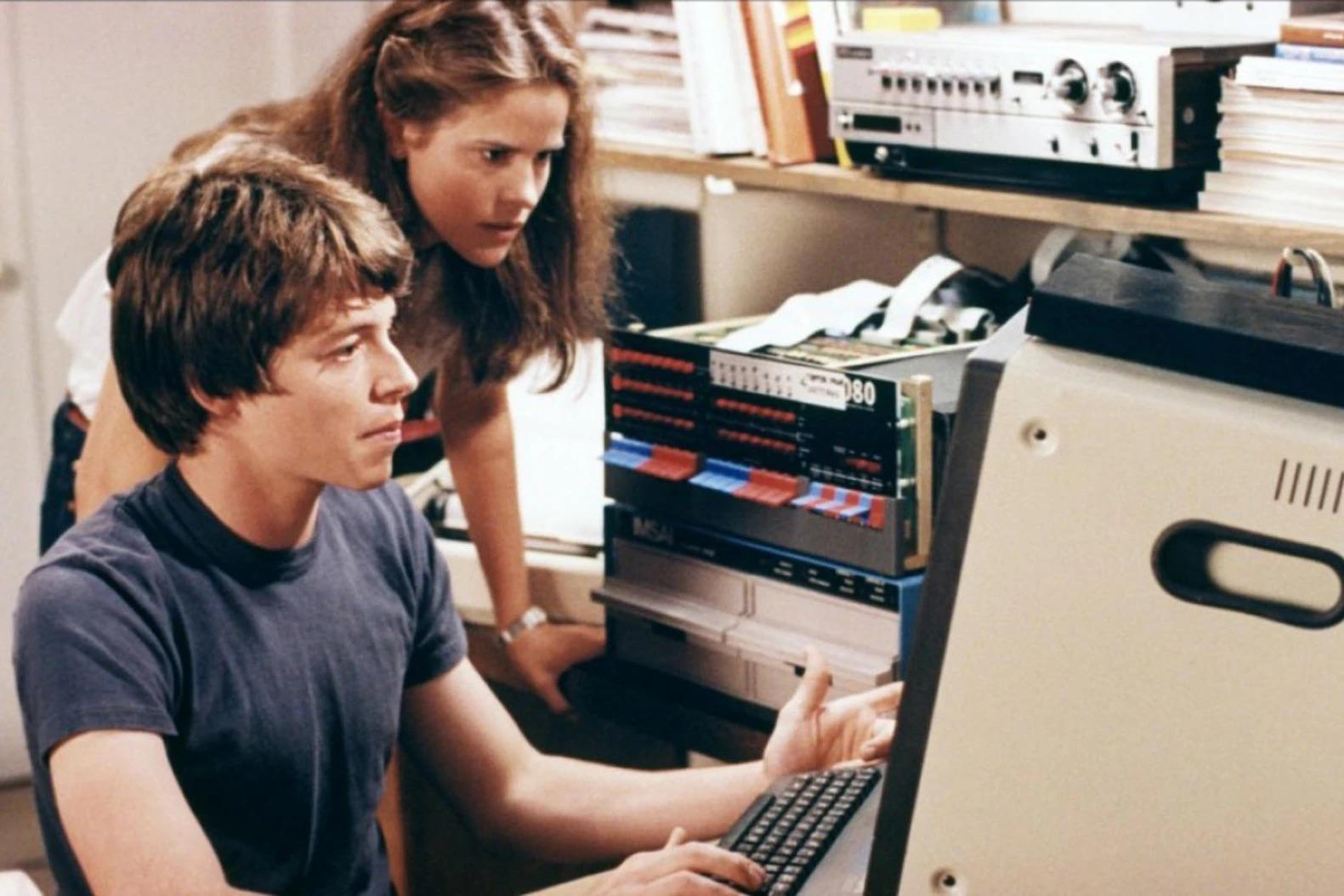
WarGames, 1983. A military supercomputer called WOPR has been handed control of America's nuclear missiles, and it's running a war simulation it can't tell apart from the real thing. Nobody can shut it down. The launch codes are being cracked one character at a time on a giant wall display, and a room full of generals can only watch.
The young hacker who stumbled into all this has one idea. He makes the computer play tic-tac-toe against itself. Game after game, faster and faster, every one ending in a draw. Then the machine turns to the war and runs it the same way: every scenario, every first strike, every response, flashing across the screens. Every one ends with no winner. The screens go quiet, and the computer offers its conclusion: a strange game, where the only winning move is not to play.
It's the most famous ending in any film about computers, and it's the right answer to the wrong question. The machine learned that a zero-sum game on a fixed board can't be won. It never asked whether the board could be changed. It had one map, and the only options it could see were to fight on it or to walk away.
That's the brief hidden inside the scene. The machine can play every game on the board faster than we ever will, and it will tell us, correctly, which ones can't be won. Choosing a bigger board is still our move.